


THIS DAY IN SPACE
GET READY TO EMBARK ON A VOYAGE OF DISCOVERY AND INSPIRATION.


Curious what happened today in space history?
Keep scrolling
LETS
GET
STARTED!
This Day in Space is your cosmic calendar, uncovering remarkable astronomical events and space milestones
that happened on today’s date — whether decades ago or just last year.
From rocket launches and moon landings to supernovae sightings and black hole breakthroughs,
we bring you two carefully curated events for every day of the year.
No more endless searching.
just scroll, discover, and be inspired
by humanity's journey beyond Earth — one day at a time.


Soyuz TMA-05M launched to the ISS, carrying a multinational crew. This contributed to the ongoing scientific research and operations aboard the station.
Launch of Soyuz TMA-05M to ISS
Launch of Soyuz TMA-05M to ISS
Soyuz TMA-05M launched to the ISS, carrying a multinational crew. This contributed to the ongoing scientific research and operations aboard the station.
THE BRIEF
PICK ANY DATE
OF YOUR CHOICE
TO BEGIN A LEARNING JOURNEY
ACROSS THE COSMOS


1200
1300
1400
1500
1600
1700
1800
1900
2000
2100
LY

KEEP
SCROLLING

TO

SEE


WHAT

IDEAS I

CAME

UP

YOU
WITH

LETS DISCOVER
FAR BEYOND OUR IMAGINATION
Add paragraph text. Click “Edit Text” to update the font, size and more. To change and reuse text themes, go to Site Styles.
EXPLORE
2008 - Chandrayaan-1 Launched
1983 - Cosmos 1514 Launch – Soviet Bion Mission
All set? Click the button below!
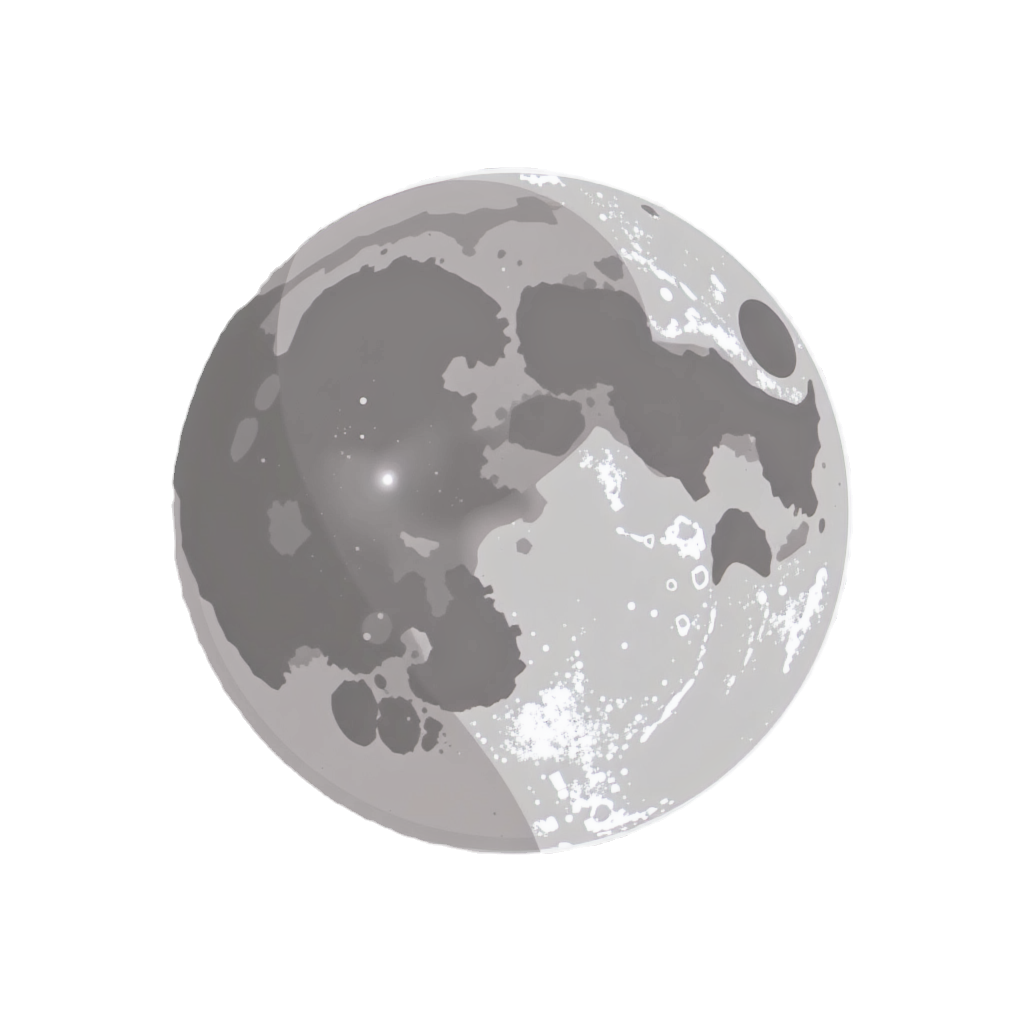



Chandrayaan-1 Launched
On October 21, 2008, the Indian Space Research Organisation (ISRO) launched Chandrayaan-1, India’s first mission to the Moon. Lifted by a PSLV-C11 rocket from the Satish Dhawan Space Centre, the spacecraft marked India’s entry into deep space exploration. The mission carried 11 scientific instruments from India and international collaborators including NASA and ESA. Its goals included high-resolution mapping of the lunar surface, detection of water ice, and studying the mineral composition of the Moon. One of its most iconic moments came when it released the Moon Impact Probe (MIP), which carried the Indian tricolor and crash-landed near the Moon’s south pole, making India the fourth nation to touch the lunar surface. Most significantly, Chandrayaan-1 confirmed the presence of water molecules on the Moon, a discovery that reshaped our understanding of lunar science. Although contact was lost after 312 days—short of its planned two-year mission—the data it collected was revolutionary and paved the way for future missions like Chandrayaan-2 and the upcoming Chandrayaan-3. The success of Chandrayaan-1 also elevated ISRO’s global reputation and demonstrated India's growing capabilities in space technology and planetary science.
Cosmos 1514 Launch – Soviet Bion Mission
On October 21, 1983, the Soviet Union launched Cosmos 1514, part of the Bion program, which focused on biological research in space. These missions were designed to study the effects of microgravity on living organisms and used modified Zenit reconnaissance satellites. Cosmos 1514 was particularly important as it carried a broad range of biological specimens including rats, monkeys, insects, and plants. The spacecraft orbited Earth for nearly five days before safely returning with its living cargo, providing invaluable data about physiological changes in microgravity environments. Researchers investigated issues such as muscle atrophy, circadian rhythms, cardiovascular adaptation, and developmental biology. The mission included international collaboration, with scientists from countries such as France and the U.S. participating in the research. This mission laid foundational knowledge for long-duration human spaceflight and the eventual planning of space stations like Mir and the ISS. Despite being less well-known than American efforts, the Bion program played a pivotal role in space medicine and helped bridge scientific gaps during a time of Cold War tension.

25
CUPS OF COFFEE DRANK IN THE PROCESS.
We created this project
to celebrate the rich timeline of
space exploration and
astronomical discoveries,
one day at a time.
Whether it’s the launch of a
legendary spacecraft,
the discovery of a distant moon,
or a historical mission milestone —
we believe every space event deserves
to be remembered.

"This Day In Space" is more than a calendar.
It’s our way of connecting people with
the vast, beautiful history of the universe. With each entry,
we aim to spark curiosity, awe, and
a sense of wonder about the cosmos.
SO WE CHASED COMETS,
DANCED WITH ECLIPSES,
CHARTED CENTURIES THROUGH STARS,
AND NAMED MYTHS ON MOONS.
NOT BAD FOR A TIMELINE,
MEASURED IN COSMIC FOOTSTEPS.
IF YOU'RE STILL READING THIS—
I GUESS SPACE DID HOLD YOUR ATTENTION


THANK YOU FOR
COMING ALONG ON
THIS JOURNEY.
CREATED BY PRANSHU VERMA AND ANANYA BURRA
CREATED BY PRANSHU VERMA AND ANANYA BURRA
CREATED BY PRANSHU VERMA AND ANANYA BURRA